

Diagnostic imaging plays a critical role in modern veterinary medicine, and pet X-rays are among the most commonly used tools to evaluate a dog or cat’s internal health. When a veterinarian recommends a dog X-ray or cat X-ray, it is to gather detailed information that cannot be obtained through a physical exam alone. Understanding what X-rays show, how the procedure works, and why it is recommended can help pet owners feel informed and confident about their pet’s care.
What Is a Pet X-Ray and What Does It Show?
A pet X-ray, also known as radiography, is a diagnostic imaging technique that uses a small amount of ionizing radiation to create images of structures inside the body. X-rays are particularly useful for evaluating bones and joints, but they can also provide valuable information about organs in the chest and abdomen.
Veterinarians commonly use dog X-rays and cat X-rays to assess conditions such as fractures, arthritis, dental disease, bladder stones, intestinal blockages, and changes in organ size or shape. According to the Merck Veterinary Manual, radiography is often a first-line imaging tool because it is fast, widely available, and effective for identifying many common medical problems.
Why Your Veterinarian May Recommend an X-Ray
Pet X-rays are recommended when a veterinarian needs more information to confirm or rule out possible causes of illness or injury. While bloodwork and physical exams provide important insights, they do not show internal structures in detail. Radiographs allow veterinarians to visualize what cannot be felt or seen externally.
In dogs and cats, X-rays are frequently used when there is limping, trauma, vomiting, difficulty urinating, breathing changes, or unexplained pain. In emergency situations, X-rays can help identify life-threatening issues quickly. In non-emergency cases, they are often used to guide treatment decisions or determine whether additional diagnostics are needed.
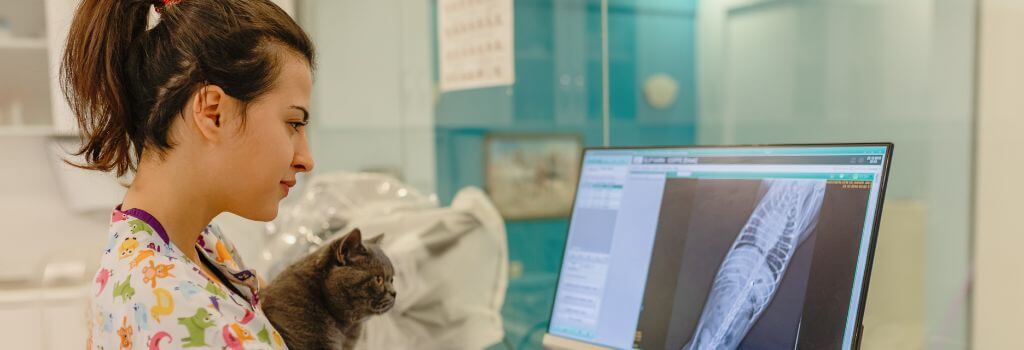
How to Prepare Your Dog or Cat for an X-Ray
In most cases, little to no preparation is required from pet owners before a dog X-ray or cat X-ray. Your veterinarian will explain which area of the body will be imaged and what information they are hoping to obtain. For routine X-rays, pets can usually eat, drink, and take medications as normal unless instructed otherwise.
For certain types of imaging, such as abdominal X-rays or contrast studies, temporary fasting may be recommended to improve image clarity. If sedation is anticipated, your veterinary team will provide specific instructions ahead of time to ensure your pet’s safety. Always follow your veterinarian’s guidance closely, as preparation requirements can vary depending on the clinical situation.
What Happens During a Pet X-Ray?
A pet X-ray is a non-invasive and painless procedure. During the imaging process, your dog or cat will be positioned on a padded table while the veterinary team carefully aligns the X-ray equipment with the area being examined. Proper positioning is essential for obtaining accurate, diagnostic-quality images.
The biggest challenge during X-rays is keeping pets still long enough to capture clear images. Some pets tolerate this well, while others may feel anxious or uncomfortable, particularly if they are in pain. In these cases, light sedation may be recommended to reduce stress, prevent movement, and ensure your pet’s comfort. Sedation is also commonly used when imaging sensitive areas such as the spine, skull, or teeth.
Most pet X-rays take only a few minutes to perform, although positioning and preparation may extend the total appointment time. Modern digital radiography allows images to be viewed almost immediately, which can speed up diagnosis and treatment planning.
Specialized and Contrast X-Rays
Standard X-rays are excellent for visualizing bones and some organs, but they may not always provide enough detail about soft tissues. In certain situations, veterinarians may recommend specialized imaging techniques, such as contrast radiography, to obtain more information.
Contrast X-rays involve administering a contrast agent, either orally or intravenously, that highlights specific organs or structures on radiographic images. This technique can be helpful when evaluating the gastrointestinal tract, urinary system, or blood vessels. Contrast studies are performed under close veterinary supervision to ensure proper dosing and patient safety.
Are Pet X-Rays Safe?
Safety is a common concern among pet owners, and it is reasonable to ask about radiation exposure. Pet X-rays do use ionizing radiation, but the levels are low and carefully controlled. Veterinary radiology guidelines emphasize that the diagnostic benefits of X-rays generally outweigh the minimal risks associated with occasional exposure.
Veterinary teams follow strict safety protocols to minimize radiation exposure for both pets and staff. Protective equipment, precise targeting, and modern digital technology all help reduce exposure. If repeated imaging is needed, your veterinarian will consider alternative options or additional safeguards when appropriate.

After Your Pet’s X-Ray: Understanding the Results
Once the images are obtained, your veterinarian will review the X-rays and discuss the findings with you. In some cases, the results are straightforward and allow for an immediate diagnosis and treatment plan. In other situations, the images may rule out certain conditions or indicate the need for further testing.
Depending on the complexity of the case, X-rays may be reviewed by a board-certified veterinary radiologist for additional interpretation. If more detailed imaging is required, such as ultrasound, CT scan, or MRI, your veterinarian will explain why these tests are recommended and how they differ from standard radiography.
The Importance of X-Rays in Veterinary Care
Pet X-rays are a vital component of comprehensive veterinary care. They provide critical insights that help veterinarians diagnose conditions accurately, monitor disease progression, and evaluate treatment outcomes. Whether used in emergency situations or routine diagnostics, radiographs support informed medical decision-making.
By understanding the purpose and process of dog X-rays and cat X-rays, pet owners can feel more comfortable when this diagnostic test is recommended. Open communication with your veterinarian ensures that you understand why an X-ray is needed and how it contributes to your pet’s overall health plan.
If you have questions, we would love to answer them for you. Please give us a call at the office at (513) 563-0410, or you can email us at info@ebapethospital.com. Our staff would love to talk with you!
Don't forget to follow us on social media Facebook, Instagram.